
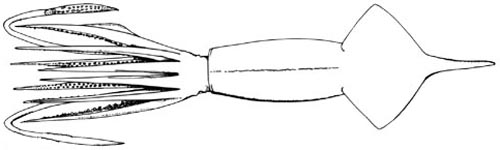
Onykia robsoni
Mature female Onykia robsoni from New Zealand, ML 885 mm, 11 kg, TAN1001_100. (c) D. Stevens
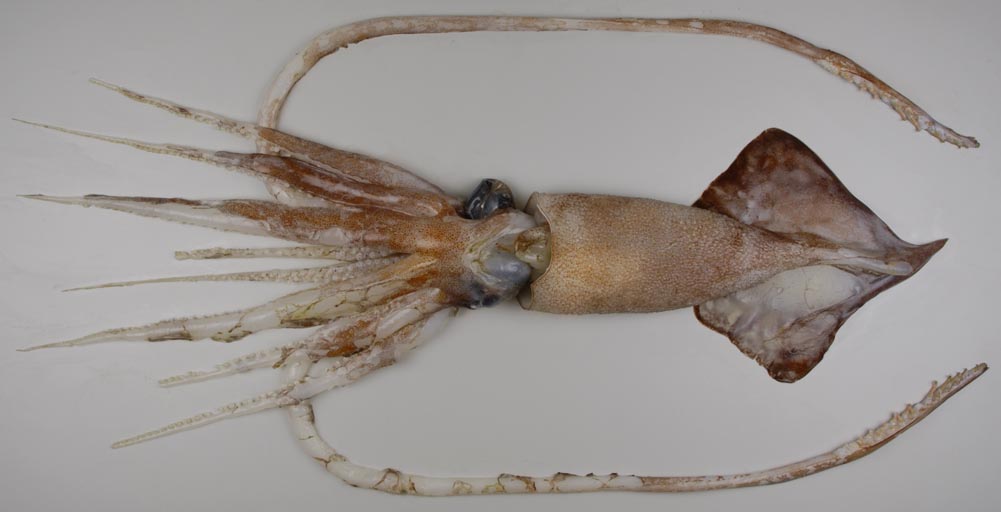
juvenile female Onykia (Moroteuthis) robsoni 260 mm ML (rey)
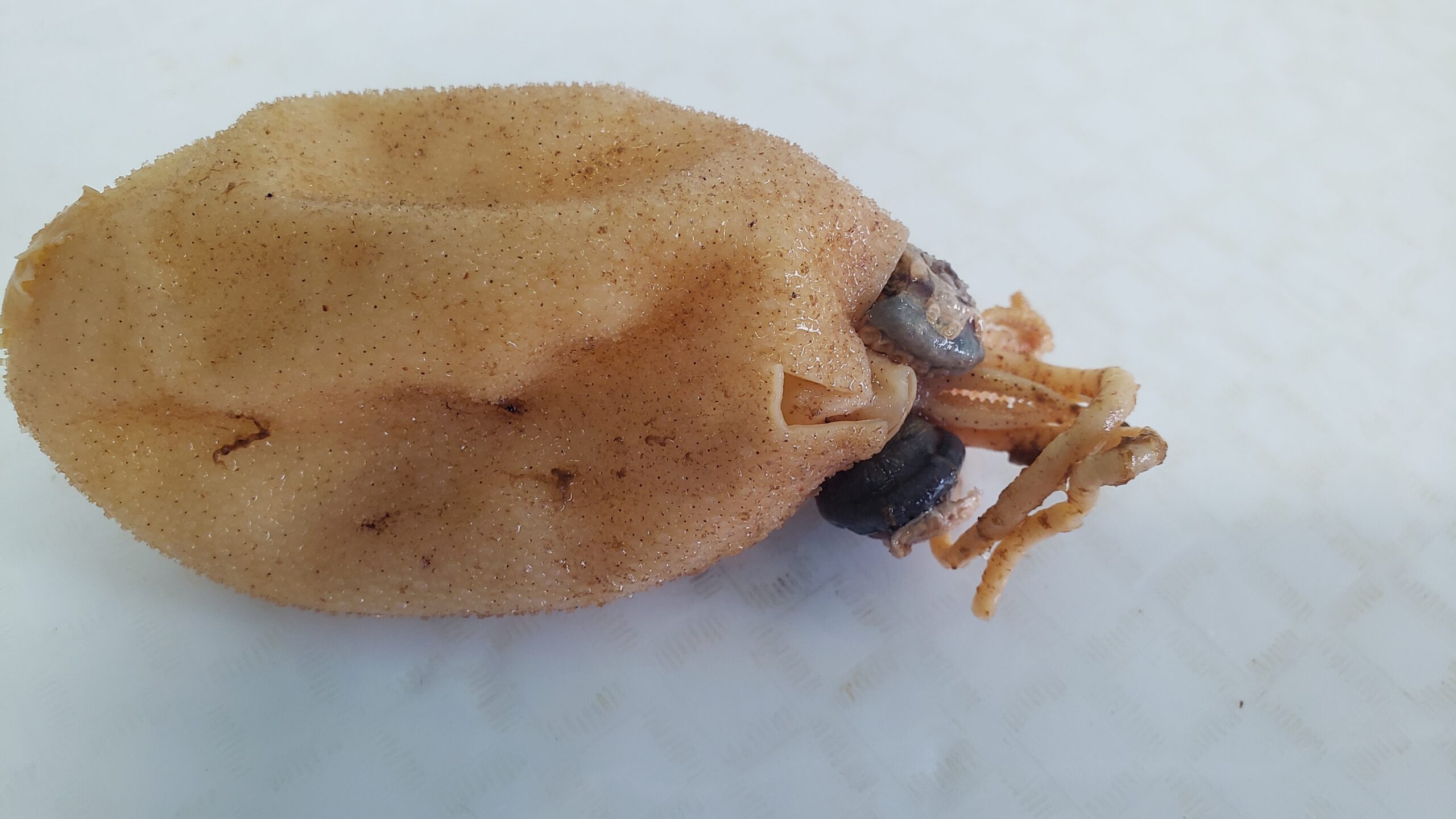
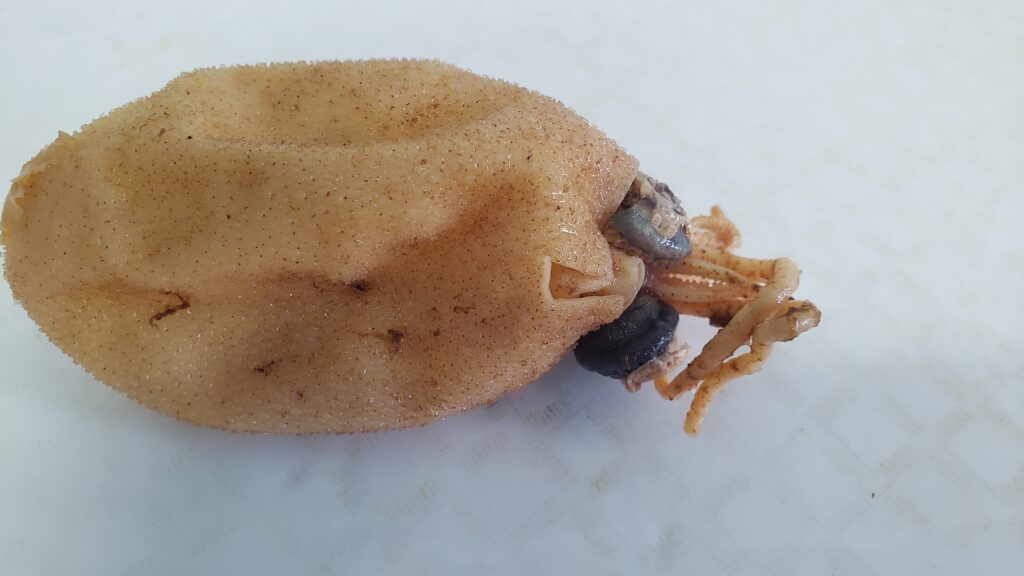
WAMS S116592 Cranchia scabra, (c) K. Bolstad
Diagnosis
An Onykia ...- with sagittate fins (fins drawn-out posteriorly).
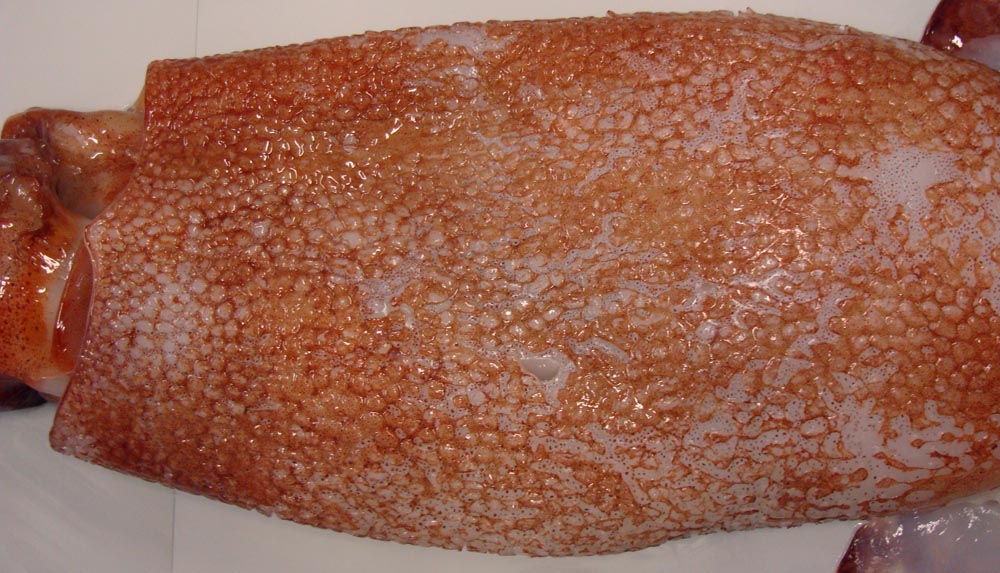
- with warts rather than ridges on skin.
- Tentacles
- Club with 13-16 pairs of hooks.Scanning electron micrographs of the hooks can be found here.
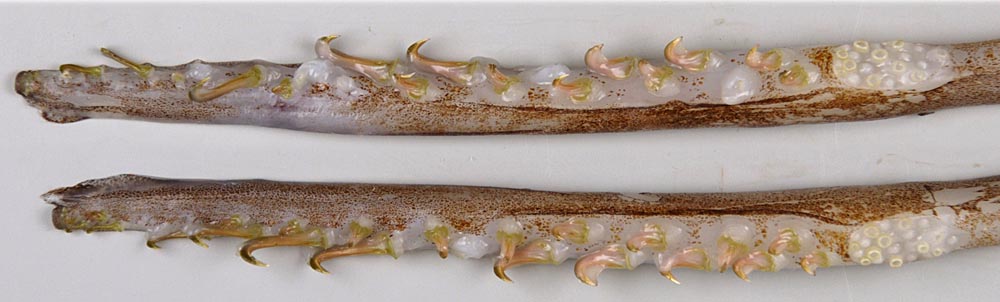
Tentacle clubs of Onykia robsoni (D Stevens) Figure. Oral view of the tentacular clubs of O. robsoni, 260 mm ML. Photograph by D. Stevens.
- Club with 13-16 pairs of hooks.
- Head
- Beaks: Descriptions can be found here: Lower beak; upper beak.
- Beaks: Descriptions can be found here: Lower beak; upper beak.
- Mantle
- Covered with fleshy, irregular warts.

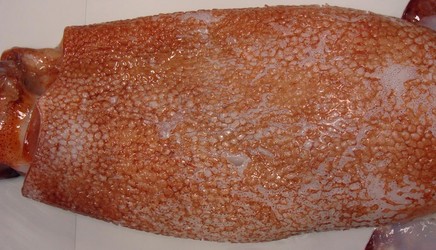
Figure. Ventral view of the mantle of O. robsoni showing skin warts. Photograph by D. Stevens.
- Covered with fleshy, irregular warts.
- Fins
- Sagittate shape.
- Length 53-62% of ML at 156-370 mm ML.
- Width 51-70% of ML at 156-370 mm ML.
- Tentacles
- Gladius
- Rostrum ventral length 23-36% of GL; triangular in cross-section.
Comments
The above data is from Kubodera et al., 1998. This species is very similar to O. robusta in the shape of the fins but is separated by the structure of the skin (i.e., warts vs ridges), and the fewer pairs of club hooks (13-16 vs 16-18).
- Onykia aequatorialis (Thiele, 1920) was described from the equatorial Atlantic at 18°07'W. Kubodera, et al., 1998, examined a spent female of O. robsoni from Bermuda that was very similar to O. aequatorialis which caused them to question the validity of the latter. Since the holotype has been lost and there are no distinguishing features in the type description, they designated O. aequatorialis a nomen dubium.
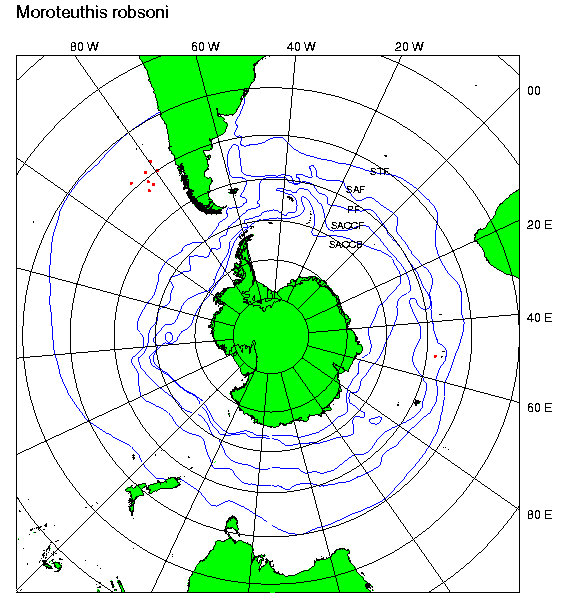
- Moroteuthis robsoni
Adam, W. 1962. Cephalopodes de l’Archipel du Cap-Vert, de l’Angola et du Mozambique. Memorias da Junta de Investigacoes do Ultramar, series 2, 33: 9-64.
T. Kubodera, U. Piatkowski, T. Okutani and M.R. Clarke. 1998. Taxonomy and Zoogeography of the Family Onychoteuthidae (Cephalopoda: Oegopsida). Smithsonian Contributions to Zoology, No. 586: 277-291.